How To Manage Your Passwords With Macpass (keepass Client For Mac
KyPass is a Mac version of KeePass from Dominik Reichl. It saves many different information (user names, passwords, urls, comments, ) in one single database. The entries are sorted in groups. The integrated search function allows to search in the complete database. KyPass Companion allows you to have auto-fill function in your Chrome or Firefox browser like Lastpass or 1Password with your Keepass database(s) using the keepasshttp plugins Features:. Fills out web forms with one click.
Allows to use multilple Keepass database at the same time. Save your master password in Apple Keychain. Support key file. Keepass v1 AND v2 are supported. OTP support.
Import passwords from kdb, kdbx or csv. Open your ssh session or http page directly from the Menu Extra. Add custom fields in the columns view - edit multiple entries - add filter on custom fields - edit existing import tasks - quick view improved - attachments could be previewed by pressing the space key - OTP support (enter otpauth://totp/Example:alice@google.com?secret=JBSWY3DPEHPK3PXP&issuer=Example in a field and KyPass will translate it to the correct secret key) - (bug fix) entry and group could now be created directly from the sidebar - (bug fix) duplicate entry is now working also in search view - (bug fix) viewing an entry doesn’t change modification date anymore. 1.8.1 Dec 21, 2015. added view password button in 'Master Password' form. icon of groups are editable.
The currently supported version of Mac OS is 10.14 (Mojave). If you are running any older version of Mac OS X, you are encouraged to migrate to 10.14 as soon as possible. You may contact the Service Desk to assist you in the migration process. Before migrating to 10.14 check out the article 'About macOS 10.14 Mojave '. A while ago, all it took to be a great password manager was to keep your passwords in an encrypted vault. Now the best password managers give you the option to sync or keep them local only, change.
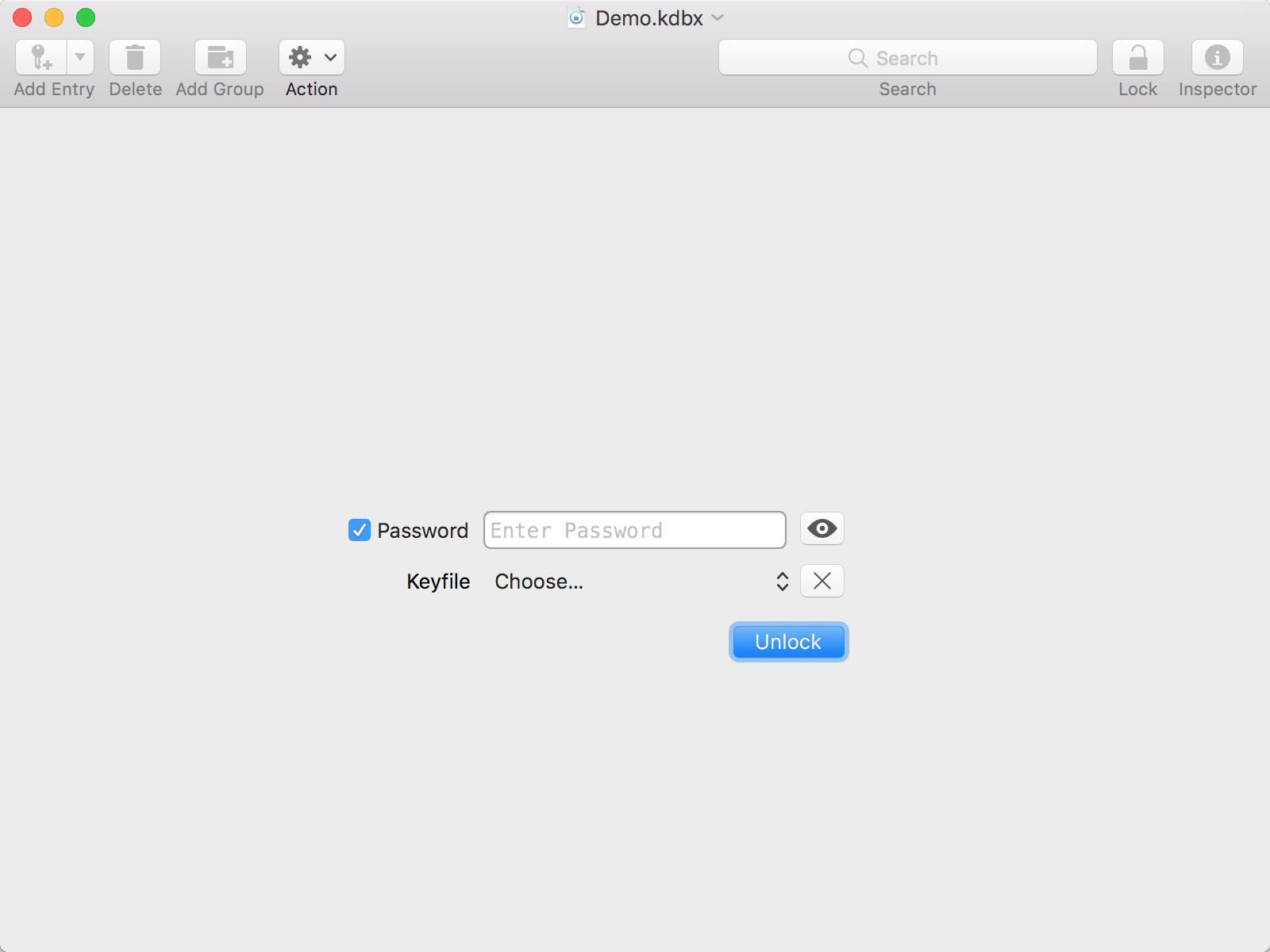
KeePass can be used via Mono on macOS but lacks vital functionality and feels sluggish and simply out of place. MacPass is an attempt to create a native macOS port of KeePass on a solid open source foundation with a vibrant community pushing it further to become the best KeePass client for macOS. All pre-built releases can be found at Github.
shortcut ⌘L to lock database. resizable sidebar. new powerful filter. (bug fix) modification & access date are now correct with kdbx.
(bug fix) fix in-memory protection field bug when the database is saved twice in the same session. (bug fix) key file settings is now supported when using 'save password in keychain'. (bug fix) fixed auto-lock when it's disabled. (bug fix) fix keepasshttp & quick list bug when 'save password in keychain' is checked. (bug fix) fix second-level domains like.ac.uk,.co.uk.
(bug fix) remove 0 length attachment. 1.2 Dec 19, 2013. Artiste212, Really good now This product has been refined and improved to the point where it is clearly stable and works very well. I use it exclusively on my Mac for all my passwords, and I’m very delighted with how it works.
The author keeps improving this app and it’s really very good for accessing keepass compatible databases (these work on PC’s as well as Macs and iOS). It’s very reliable, although it lacks the automatic features of some passwork keepers, it doesn’t screw up or lose things on me. And I don’t think this is as open to large scale hacks as the more commercial apps, because they don’t keep a copy of your data.
Artiste212, Really good now This product has been refined and improved to the point where it is clearly stable and works very well. I use it exclusively on my Mac for all my passwords, and I’m very delighted with how it works. The author keeps improving this app and it’s really very good for accessing keepass compatible databases (these work on PC’s as well as Macs and iOS). It’s very reliable, although it lacks the automatic features of some passwork keepers, it doesn’t screw up or lose things on me.
And I don’t think this is as open to large scale hacks as the more commercial apps, because they don’t keep a copy of your data. RLP-67CB, Now it’s broken I was prompted by the Mac AppStore to update. Now it will not open my database. I tried a reboot. That did not help.
It worked just fine prior. I thought Ok let me delete the app and install the old version. Nope, old version is not available from KyPass website. Now I am stuck with no way to open my password database from my MacBookPro running HighSierra. BTW It looks like the Discord support site for this is also broken. Developer Response, Problem was fixed today. More informations on your main website.
How To Manage Your Passwords With Macpass (keepass Client For Mac Download
RLP-67CB, Now it’s broken I was prompted by the Mac AppStore to update. Now it will not open my database. I tried a reboot. That did not help. It worked just fine prior.
Searching for the right 3D animation software that best fits you? Try Smith Micro's Poser 10 free for 30 days. Start Free Mac Trial Start Free Win Trial. Base of free software: poser 10 for mac.
I thought Ok let me delete the app and install the old version. Nope, old version is not available from KyPass website. Now I am stuck with no way to open my password database from my MacBookPro running HighSierra. BTW It looks like the Discord support site for this is also broken.
Developer Response, Problem was fixed today. More informations on your main website.
More about cybersecurity. A password manager stores all of your eggs in one basket, so to speak.
While it might sound intimidating (what if it gets lost or stolen?), it actually allows you to maintain deeper levels of security. When using a master password you can access all of your account and password information via a single interface. With KeePass, all passwords are stored locally in an encrypted file (with a.kdbx extension), which cannot be accessed via alternate means such as opening it in a text editor or Microsoft Word. SEE: (Tech Pro Research) Installing KeePass When you fire up KeePass you start with a fairly blank slate ( Figure A). You can use a master password, use a key file (a special security file, which must be present on your system before you can access your passwords), or tie access into your Windows account. I recommend using a master password, and KeePass will show you a helpful 'estimated quality' bar which determines the strength of your security password. Note: It is possible to use both a master password and a key file for heightened security; that way if your database file is lost or stolen along with your master password all is not lost.
You can also set up some options such as database encryption level, whether to use a recycling bin for deleted entries and password change selections. KeePass will then open your new database. Note the default Groups to the left; you can customize these or add new ones by right-clicking in that space and choosing New Group. To add password entries in a group, right-click the main window and choose New Entry. Here's an example screen of what my KeePass entries look like ( Figure C): Figure C. Administrator As you can see, the interface is intuitive and easy to navigate; clicking various groups to display and work with the password entries should be immediately familiar to any Windows user.
To add new entries, you can right-click the main screen and choose Add Entry. Let's look at the available options involved ( Figure D). Figure D KeePass allows you to generate passwords (or enter your own) and store these in an encrypted format.
To create a password, click the Generate a Password icon to the right of the Repeat field ( Figure E): Figure E You can pick your own password, utilize a password generator to create a password (and specify options related thereto), or just have KeePass create one for you choosing one of the 'hex key' options—the higher the bit level the more complex the password. Although you can display the passwords by clicking the Show/Hide Password Using Asterisks icon to the right of the password field, it's also possible to skate right by without ever knowing the passwords involved and letting KeyPass set and store them all on its own. It's easy to just copy and paste the passwords right into the login screen or box.
You can open the entry and copy that string of asterisks, or just double-click the entry itself (or right-click the entry and choose Copy Password) to copy the details into your clipboard/buffer. It's possible to save the website addresses associated with your accounts and even open them directly via the browser of your choice. You can also add Notes such as the answers to security questions or other relevant details. The Advanced tab provides the following capabilities: You can add string fields (such as usernames, credit card numbers or other details you want to copy and paste) and attachments here. The Properties tab looks like the following screenshot ( Figure F): Figure F This allows you to color-code entries, add tags, configure a specific browser to open the associated URL, or work with plug-in data related to the website. The Auto-Type tab resembles the following ( Figure G): Figure G The auto-type options here allow you to configure what sort of data is entered automatically and into which target window.
For instance, a user ID followed by a password or standard keyboard entries such as space, tab, etc. Finally, we come to the History tab ( Figure H). Figure H KeePass automatically keeps a history of your passwords if you change them in the program so you can check for previous passwords and utilize them on systems, which may not be configured with your current ones. Once you've set up your entries, make sure to click the Floppy Disk icon in the toolbar to save the database.
Then when you exit and re-open KeePass you will see the following prompt ( Figure I). Figure I KeePass has many additional powerful functions available through the File/Edit/View/Tools/Help options.